
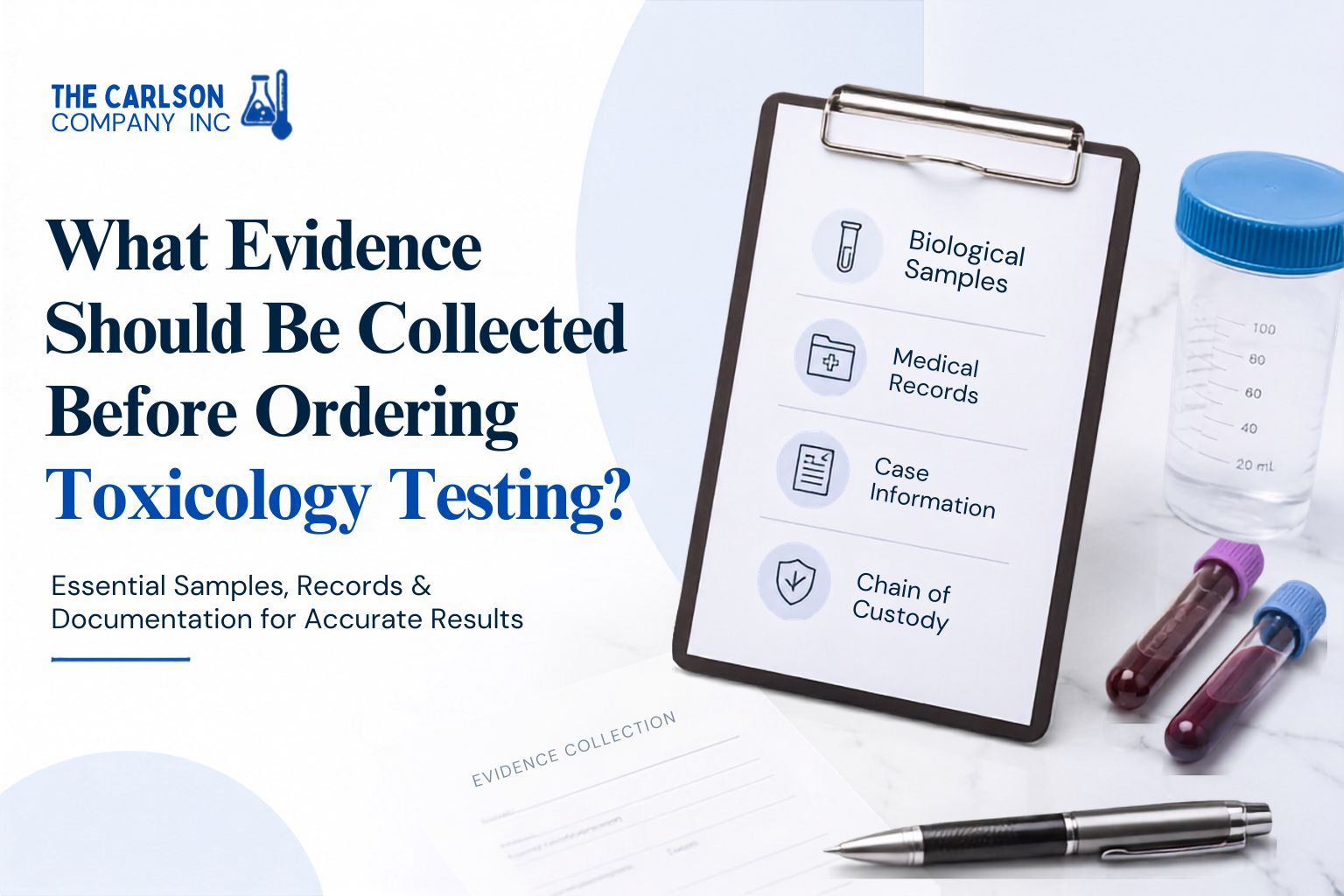
When preparing for postmortem forensic toxicology testing, having the right evidence and documentation available is just as important as choosing a qualified forensic laboratory. The quality and condition of the evidence submitted can directly affect the accuracy of toxicology findings and the interpretation of laboratory results.
Before submitting samples for testing, it is important to understand what evidence you may need and why each component can play a role in reaching accurate, scientifically supported conclusions.
Why Evidence Collection Matters in Postmortem Toxicology Testing
Forensic toxicology is more than simply identifying drugs or alcohol in a biological sample. Toxicologists evaluate laboratory findings alongside medical history, case details, autopsy findings, and other available evidence to determine whether detected substances may have contributed to or caused a death.
Incomplete documentation, limited samples, or poor sample preservation can make testing and interpretation more challenging. Collecting and documenting evidence correctly from the outset helps provide toxicologists with the information they need to evaluate findings in the appropriate context.
Because every case is different, the samples and supporting information you need will depend on factors such as the suspected cause of death, the condition of the remains, and the substances investigators are examining.
Biological Samples That May Be Used for Toxicology Testing
One of the questions forensic specialists hear most often is, “What samples are needed for postmortem toxicology testing?”
The answer depends on the circumstances of the case. Different biological specimens can provide different types of information, allowing toxicologists to develop a more complete understanding of possible substance exposure.
Commonly analyzed samples may include:
- Blood
- Urine
- Hair
- Tissue
- Bone
- Teeth
- Stored hospital specimens
Blood can provide important information about substances present around the time of death, although postmortem changes and redistribution can affect the concentration of certain substances. Urine may provide evidence of previous exposure but generally does not establish the concentration of a substance at the time of death.
Hair may help identify longer-term exposure patterns, while tissue, bone, and teeth may be considered in specific circumstances when conventional specimens are unavailable or unsuitable. Stored hospital specimens collected before death may also provide valuable information in some investigations.
The appropriate samples will depend on the circumstances of the case and the analytical questions that need to be answered.
Medical Records Help Toxicologists Interpret Results
Laboratory findings rarely tell the complete story on their own. Medical records provide valuable context that allows forensic toxicologists to distinguish prescribed medications from unexpected substances and better understand their potential significance.
Providing medical documentation can reduce the risk of misinterpreting findings and support a more complete scientific assessment.
Relevant records may include:
- Prescription and over-the-counter medication history
- Hospital treatment records
- Existing medical conditions
- Previous laboratory reports
- Emergency medical documentation
- Relevant treatment history
- Available information about known substance use
This information can help toxicologists understand whether a detected substance was expected based on the person’s medical treatment or whether further investigation may be warranted.
Incident Information Can Strengthen the Investigation
Accurate toxicology testing is supported not only by biological evidence but also by detailed information about the circumstances surrounding the death.
Information such as the location of the incident, witness observations, emergency response reports, or suspected poisoning concerns can help toxicologists determine which analytical methods may be most appropriate.
Details about the suspected substance, possible exposure route, or medications available to the individual may also provide important investigative context.
Even seemingly small details can help laboratory professionals select appropriate testing strategies and interpret laboratory findings more accurately.
Why Autopsy Findings Matter
Postmortem toxicology and autopsy examinations are designed to complement one another rather than serve as separate investigations.
While an autopsy can identify physical findings and potential causes of death, toxicology testing can help determine whether drugs, alcohol, or other toxic substances may have contributed to or caused the death.
For example, the presence of a drug in a biological sample does not automatically mean that the substance caused the death. Toxicologists may need to consider the concentration detected, the individual’s medical history, the effects of postmortem changes, and other findings from the investigation.
Together, autopsy findings, toxicology results, and investigative information can provide a more comprehensive understanding of the circumstances surrounding a death.
Understanding Postmortem Redistribution
One factor that can complicate postmortem toxicology interpretation is postmortem redistribution.
After death, some drugs and chemicals can move between tissues and surrounding fluids, potentially changing their concentrations in certain specimens. This means that the concentration measured in a postmortem sample may not always directly represent the concentration that was present in the body immediately before death.
For this reason, toxicology findings should be interpreted by qualified professionals within the context of the case. The type and location of the sample, the time since death, and other postmortem changes may all be relevant when evaluating results.
Maintaining the Chain of Custody
In cases involving litigation, criminal investigations, or insurance claims, maintaining a documented chain of custody is essential.
Chain of custody provides a record of how evidence was collected, handled, stored, and transferred from the time of collection through laboratory analysis. Proper documentation helps establish the integrity and traceability of the evidence and can be particularly important when laboratory findings may be reviewed in legal proceedings.
The exact requirements for maintaining a legally defensible chain of custody can vary depending on the circumstances and jurisdiction. When testing may be used in a legal matter, appropriate procedures should be followed from the beginning of the investigation.
Common Challenges During Evidence Collection
Evidence collection does not always occur under ideal circumstances. Decomposition, delayed discovery, environmental exposure, or limited biological material may reduce the availability of standard samples.
When blood or urine cannot be obtained, experienced forensic toxicology laboratories may be able to recommend alternative testing strategies involving other available specimens.
However, the suitability of alternative samples depends on the circumstances of the case and the questions the investigation needs to answer. Proper preservation, storage, and handling remain critical to maintaining sample integrity.
Early consultation with a forensic toxicology laboratory can help investigators, attorneys, and other professionals understand what samples may be suitable and how they should be handled.
What Happens During Postmortem Toxicology Testing?
Once appropriate samples and supporting information are submitted, the laboratory can review the case details and determine the appropriate testing approach.
Depending on the circumstances, the process may involve:
- Reviewing the submitted evidence and case information
- Assessing which samples are available and suitable for analysis
- Selecting appropriate analytical methods
- Conducting screening and confirmatory testing where appropriate
- Identifying and, when applicable, quantifying detected substances
- Interpreting laboratory findings within the context of the case
- Preparing a laboratory report describing the findings
Postmortem toxicology investigations may involve different stages of laboratory analysis. Depending on the case, testing may begin with screening methods designed to identify potential substances of interest.
When investigators detect or suspect a substance, forensic toxicologists may perform additional confirmatory analysis using more specific analytical techniques. Forensic toxicologists can use methods such as gas chromatography-mass spectrometry (GC-MS) and liquid chromatography-mass spectrometry (LC-MS) to identify and, where appropriate, quantify specific substances.
The exact testing approach depends on the available evidence, the suspected substances, and the circumstances of the investigation. A forensic toxicologist can help determine which analytical methods are most appropriate for a particular case.
Also Read: How Labs Detect Date Rape Drugs
What Can Postmortem Forensic Toxicology Testing Detect?
Modern forensic toxicology laboratories can identify a wide range of substances that may be relevant during a death investigation.
Depending on the laboratory’s testing capabilities and the circumstances of the case, these may include:
- Prescription medications
- Over-the-counter medications
- Illicit drugs
- Alcohol
- Drug metabolites
- Heavy metals
- Poisonous chemicals
- Other potentially toxic compounds
Laboratory results are interpreted alongside medical records, autopsy findings, and investigative information rather than being viewed in isolation.
Why Choose Specialized Postmortem Forensic Toxicology Testing Services?
Postmortem toxicology requires specialized knowledge, validated laboratory methods, and careful interpretation of complex findings. Choosing a laboratory with relevant forensic expertise can help ensure that professionals use an appropriate testing approach and interpret results in the context of the investigation.
At The Carlson Company, our forensic toxicology professionals work with attorneys, investigators, families, and other professionals to provide confidential toxicology testing and support for complex cases.
If you are unsure which samples may be appropriate or what testing may be required, consulting with a forensic toxicology professional before submitting evidence can help clarify the next steps.
Conclusion
Collecting appropriate biological samples and supporting documentation is an important part of postmortem toxicology testing. The available specimens, medical history, autopsy findings, and circumstances surrounding a death can all provide valuable context when interpreting toxicology results.
Because every case is different, the type of samples and testing you need will depend on the circumstances of the investigation and the questions you need to answer. Working with experienced forensic toxicology professionals can help ensure that you evaluate available evidence using an appropriate testing and interpretation approach.
The Carlson Company provides forensic toxicology testing and analysis for complex cases involving suspected drug exposure, poisoning, and other toxic substances.
Frequently Asked Questions
What samples are needed for postmortem toxicology testing?
The appropriate samples depend on the circumstances of the case. Forensic toxicologists commonly consider blood and urine, while they may also analyze hair, tissue, bone, teeth, and stored hospital specimens in certain situations.
Can toxicology testing be performed without blood?
Yes. Depending on the circumstances, other biological specimens may be suitable for testing. These may include urine, hair, tissue, bone, teeth, or preserved hospital specimens. The suitability of each sample depends on the investigation and the substances investigators are testing for.
What substances can postmortem toxicology detect?
Depending on the testing performed, postmortem toxicology may identify prescription medications, over-the-counter medications, illicit drugs, alcohol, heavy metals, and other potentially toxic substances.
Why are medical records important?
Medical records provide important context for interpreting laboratory findings. They can help toxicologists understand prescribed medications, existing medical conditions, and other factors that may influence the significance of detected substances.
How long does toxicology testing take?
Testing times vary depending on the type and number of analyses requested, the condition and availability of samples, and the complexity of the investigation. Additional testing or confirmatory analysis may also affect turnaround times.
Can toxicology testing be used in legal investigations?
Yes. Properly collected, documented, and analyzed toxicology evidence can support legal, insurance, and forensic investigations. The admissibility and evidentiary weight of laboratory findings can depend on the circumstances of the case, applicable legal requirements, and how investigators or other parties handled the evidence.
