
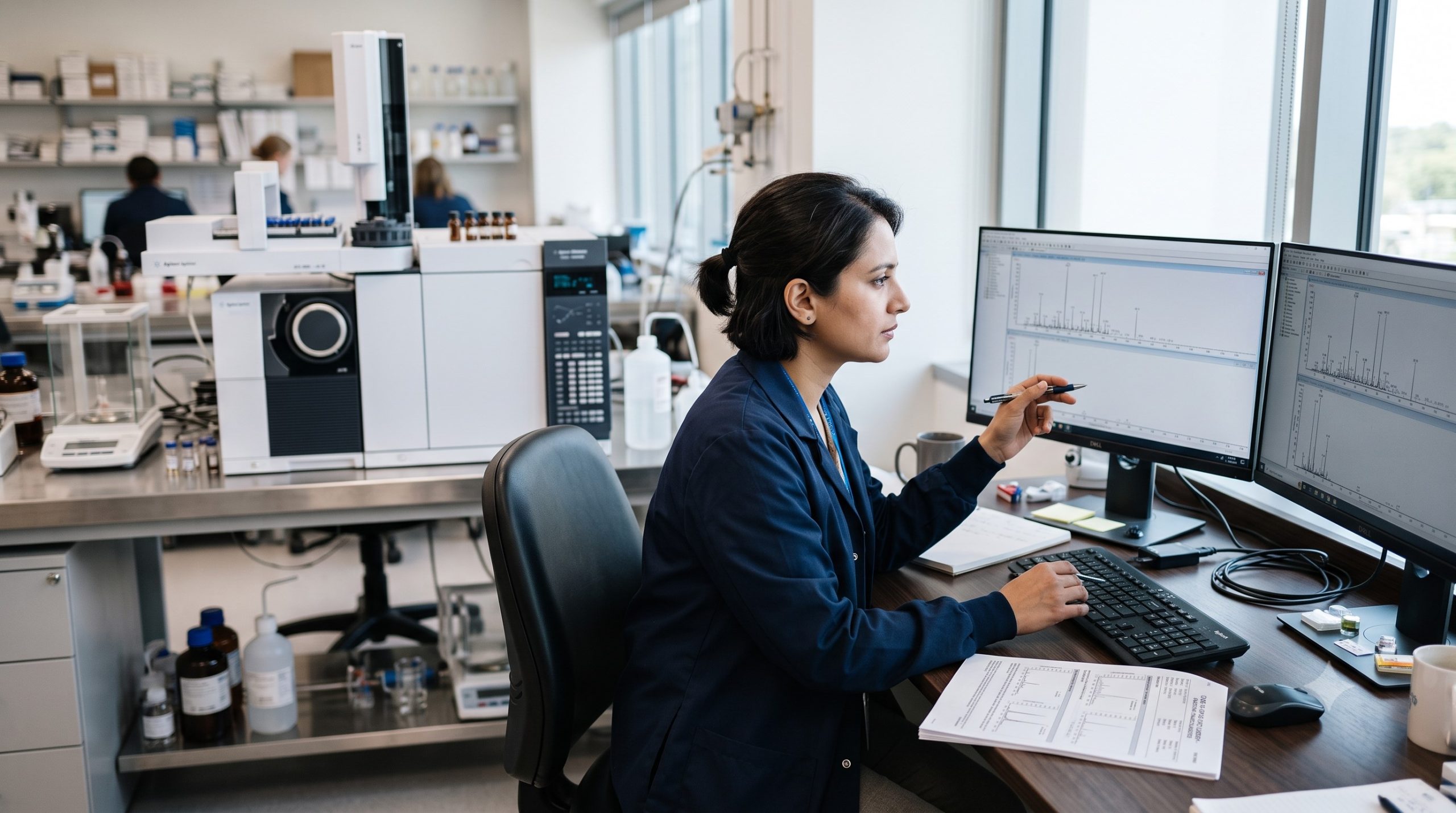
When the identification of a drug, chemical, toxin, or unknown substance has legal, medical, or investigative implications, accuracy is essential.
Whether the results are being used to support a forensic investigation, evaluate a suspected poisoning, identify an unknown powder, or investigate product contamination, laboratory findings must be scientifically reliable. The results must also be capable of withstanding careful scrutiny.
Among the many analytical techniques available today, Gas Chromatography-Mass Spectrometry (GC-MS) is widely recognized as one of the most accurate methods for identifying chemical compounds.
Its ability to separate complex mixtures and identify individual substances with a high degree of specificity has made it a trusted analytical tool across forensic science, healthcare, environmental testing, pharmaceutical research, and industrial quality control.
But how accurate is GC-MS testing, and what factors influence the reliability of its results? Understanding the strengths and limitations of this analytical method can help attorneys, investigators, healthcare professionals, businesses, and private individuals make informed decisions when laboratory analysis is required.
What Does Accuracy Mean in GC-MS Testing?
When discussing laboratory analysis, the word “accuracy” is often misunderstood. Many people assume it simply means a test is “correct,” but in analytical chemistry, accuracy has a much more specific meaning.
Accuracy refers to how closely a laboratory result reflects the true identity or concentration of a substance within a sample. An accurate analytical method consistently produces results that correctly identify chemical compounds while minimizing the risk of false identifications.
For GC-MS testing, accuracy involves two key components:
- Correctly identifying the compounds present in a sample.
- Measuring those compounds with a high degree of reliability when quantitative analysis is performed.
This distinction is important because laboratory testing is not limited to answering whether a substance is present. In many situations, analysts must also determine how much of a substance is present and whether that concentration has scientific, medical, or legal significance.
Why GC-MS is Considered One of the Most Accurate Analytical Methods
GC-MS has earned its reputation because it combines two complementary scientific techniques into a single analytical process.
Gas chromatography separates the individual compounds within a sample, while mass spectrometry identifies each separated compound by analyzing its molecular characteristics. Together, these techniques provide a level of confidence that is difficult to achieve using many other analytical methods.
Several characteristics contribute to its accuracy.
Exceptional Compound Identification
Many samples contain dozens or even hundreds of different chemical compounds. Attempting to identify them without first separating the mixture can produce unreliable results.
Gas chromatography addresses this challenge by separating compounds before they enter the mass spectrometer. Each substance reaches the detector at a different time, reducing interference from other compounds and allowing more accurate identification.
The mass spectrometer then analyzes each separated compound and compares its molecular fingerprint against validated reference data, helping distinguish between substances that may appear similar using less advanced testing methods.
Also Read : A Guide to Identifying and Testing Unknown Substances
High Sensitivity
One of the greatest strengths of GC-MS is its ability to detect extremely small quantities of many chemical compounds.
This high sensitivity allows laboratories to identify trace amounts of drugs, toxins, contaminants, and other substances that might not be detected through routine screening methods.
The ability to detect compounds at very low concentrations is particularly valuable in situations such as:
- Forensic investigations
- Poisoning cases
- Drug confirmation testing
- Environmental contamination studies
- Product safety investigations
Detecting trace amounts, however, is only part of the process. Accurate interpretation also depends on understanding whether those detected levels are scientifically significant within the context of the case.
Also Read : Importance of Identifying Unknown Substances: Why Does It Matter?
Excellent Specificity
Sensitivity describes a test’s ability to detect substances, while specificity refers to its ability to distinguish one compound from another.
This is especially important because many chemicals have similar structures or produce similar reactions during preliminary screening tests.
GC-MS significantly reduces the likelihood of misidentification by evaluating each compound’s unique molecular fingerprint rather than relying solely on general chemical reactions.
As a result, laboratories can distinguish between compounds that may otherwise appear identical during less sophisticated testing procedures.
What Factors Influence GC-MS Accuracy?
Although GC-MS is one of the most reliable analytical technologies available, no laboratory method is entirely independent of the conditions under which testing is performed.
The quality of the final results depends on several important factors.
Sample Quality
Accurate testing begins with the sample itself.
Samples that have been contaminated, degraded, improperly collected, or incorrectly stored may produce findings that are more difficult to interpret.
For this reason, laboratories follow established procedures for receiving, documenting, handling, and preparing samples before analysis begins.
Maintaining sample integrity throughout the testing process helps ensure the analytical results accurately reflect the material submitted for examination.
Instrument Calibration
Sophisticated laboratory instruments require regular calibration and performance verification to maintain consistent accuracy.
Calibration involves analyzing certified reference materials with known properties to confirm that the instrument continues to produce reliable measurements.
Routine calibration also allows laboratories to identify potential performance issues before they affect analytical results.
Without proper calibration, even advanced instrumentation cannot consistently achieve the level of accuracy expected in forensic, legal, or scientific investigations.
Method Validation
Before analytical methods are used for routine GC-MS testing, laboratories validate them to confirm they consistently produce accurate and reliable results under defined testing conditions.
The validation process evaluates factors such as accuracy, precision, sensitivity, specificity, repeatability, and detection limits to ensure the method performs as intended.
Method validation is a critical quality assurance step that helps deliver consistent laboratory results across different sample types and analytical applications.
Analyst Expertise
Accurate GC-MS testing depends not only on advanced instrumentation but also on the expertise of the laboratory professionals performing the analysis.
Experienced analysts prepare samples, monitor instrument performance, review analytical data, and verify compound identification to ensure reliable results.
Their scientific knowledge and careful interpretation help maintain the accuracy, quality, and integrity of every laboratory report.
Common Misconceptions About GC-MS Accuracy
Because GC-MS is often described as the “gold standard” of analytical testing, many people assume it produces perfect results under every circumstance.
In reality, its reliability depends on both the analytical technology and the quality of the overall testing process.
Misconception 1: GC-MS Never Produces Errors
GC-MS is an exceptionally reliable analytical method, but like any scientific technique, its performance depends on proper sample handling, validated methods, instrument maintenance, and expert interpretation.
When these quality measures are followed, the likelihood of analytical error is greatly reduced.
Misconception 2: Detecting a Substance Automatically Explains What Happened
Identifying a chemical compound is only one part of laboratory analysis.
For example, detecting a prescription medication does not necessarily indicate misuse, and finding a toxin does not automatically establish that it caused illness or death. Laboratory findings must always be interpreted within the broader medical, forensic, or investigative context.
Misconception 3: All Laboratory Tests Provide the Same Level of Confidence
Many preliminary screening methods are designed to quickly identify whether certain categories of substances may be present.
While these screening techniques are valuable, they generally do not provide the same level of specificity as GC-MS. Confirmatory analysis is often performed to verify initial screening results before important medical, legal, or investigative decisions are made.
Misconception 4: Accuracy Depends Only on the Instrument
Although GC-MS instrumentation plays a central role in laboratory analysis, accurate results depend on the entire testing process, from sample collection and preparation to quality assurance procedures, method validation, data review, and expert interpretation.
A well-maintained instrument is only one component of producing reliable laboratory findings.
Why Proper Sample Collection Matters
Even the most advanced analytical technology cannot compensate for poor sample quality. Before a sample reaches the laboratory, it must be collected, packaged, stored, and transported correctly to preserve its integrity.
Factors that can affect sample quality include:
- Environmental contamination
- Improper storage temperatures
- Exposure to moisture or sunlight
- Cross-contamination during collection
- Delays in submission
- Inadequate packaging
Following proper collection and chain-of-custody procedures helps ensure the sample received by the laboratory accurately represents the material being tested. This is particularly important when analytical results may be used in legal proceedings, forensic investigations, insurance claims, or regulatory matters.
Where is GC-MS Used?
Because of its high accuracy and reliability, GC-MS is used across numerous industries where precise chemical identification is essential.
Forensic Science
GC-MS is widely used to identify controlled substances, confirm preliminary drug screening results, analyze unknown materials, and support criminal and civil investigations.
Healthcare and Toxicology
Medical professionals and toxicologists use GC-MS to help identify drugs, poisons, medications, and toxic compounds that may contribute to illness, poisoning, or other medical concerns.
Environmental Testing
Environmental laboratories use GC-MS to detect contaminants in soil, water, and air, helping organizations monitor pollution, investigate contamination events, and meet regulatory requirements.
Food and Beverage Testing
Manufacturers and investigators may use GC-MS to identify contaminants, adulterants, unexpected chemicals, or other substances that could affect food quality or consumer safety.
Industrial and Product Safety
GC-MS is commonly used to analyze raw materials, manufactured products, industrial chemicals, and commercial goods to verify composition, investigate contamination, and support quality assurance programs.
Also Read : Why People Seek Unknown Substance Testing
Why Laboratory Expertise Matters as Much as the Technology
While GC-MS instrumentation is highly sophisticated, obtaining reliable analytical results involves much more than operating the equipment.
Experienced laboratory professionals play a critical role throughout the testing process by:
- Selecting the appropriate analytical method
- Preparing samples correctly
- Monitoring instrument performance
- Reviewing analytical data
- Confirming compound identification
- Interpreting complex findings
- Performing quality assurance checks before issuing reports
This combination of advanced instrumentation and scientific expertise helps ensure laboratory findings are accurate, reliable, and appropriate for their intended use.
While GC-MS instrumentation is highly sophisticated, obtaining reliable results depends on the expertise behind the analysis. Accurate GC-MS testing requires validated laboratory methods, strict quality control procedures, and experienced analysts who can correctly interpret complex analytical findings.
Understanding the Limitations of GC-MS
Although GC-MS is recognized as one of the most reliable analytical techniques available, it is important to understand that no laboratory method is universally applicable to every substance or testing scenario.
For example:
- Some compounds may require alternative analytical techniques because they are not suitable for gas chromatography.
- Certain samples may need specialized preparation before analysis.
- Results must always be interpreted within the context of the sample type and the purpose of the investigation.
For these reasons, laboratories often select analytical methods based on the characteristics of the sample and the compounds being investigated rather than relying on a single testing approach for every case.
Understanding these limitations helps ensure realistic expectations while reinforcing the importance of selecting the most appropriate laboratory method for the analytical question being asked.
Conclusion
GC-MS has earned its reputation as one of the most accurate and dependable analytical techniques available for identifying drugs, chemicals, toxins, contaminants, and unknown substances. Its combination of high sensitivity, exceptional specificity, and scientifically validated analytical methods makes it an essential tool in forensic science, healthcare, environmental testing, industrial quality control, and many other fields.
However, accurate laboratory results depend on more than sophisticated instrumentation alone. Proper sample collection, validated analytical methods, routine quality assurance, and experienced laboratory professionals all contribute to the reliability of the final report.
Whether testing is performed for legal, medical, investigative, or industrial purposes, understanding how GC-MS works and what factors influence its accuracy, helps individuals and organizations make informed decisions when selecting laboratory testing solutions.
When reliable laboratory analysis is required, working with an experienced laboratory can make a significant difference in the quality and reliability of the results. The Carlson Company provides advanced analytical testing for forensic, legal, medical, industrial, and investigative applications using scientifically validated laboratory methods.
Frequently Asked Questions
Why is GC-MS considered one of the most accurate laboratory testing methods?
GC-MS combines gas chromatography and mass spectrometry to separate and identify chemical compounds with a high degree of sensitivity and specificity. This combination allows laboratories to accurately identify many drugs, chemicals, toxins, and unknown substances.
Can GC-MS detect very small amounts of a substance?
Yes. GC-MS is capable of detecting many compounds at extremely low concentrations, making it valuable for forensic investigations, toxicology, environmental testing, and other applications where trace-level detection is important.
Is GC-MS more accurate than preliminary screening tests?
In many situations, yes. Preliminary screening tests are designed to indicate whether certain categories of substances may be present, while GC-MS provides confirmatory identification with significantly greater specificity.
What factors influence the accuracy of GC-MS testing?
Accuracy depends on several factors, including sample quality, proper collection and storage, instrument calibration, validated laboratory methods, quality assurance procedures, and expert review of the analytical data.
Can GC-MS identify unknown substances?
GC-MS can identify many organic compounds by comparing their molecular characteristics with validated reference libraries. However, the ability to identify a specific substance depends on factors such as the sample type, compound characteristics, and the analytical methods used.
Is GC-MS used only in forensic laboratories?
No. GC-MS is widely used in healthcare, pharmaceutical research, environmental analysis, food safety, industrial quality control, academic research, and many other scientific fields.
