
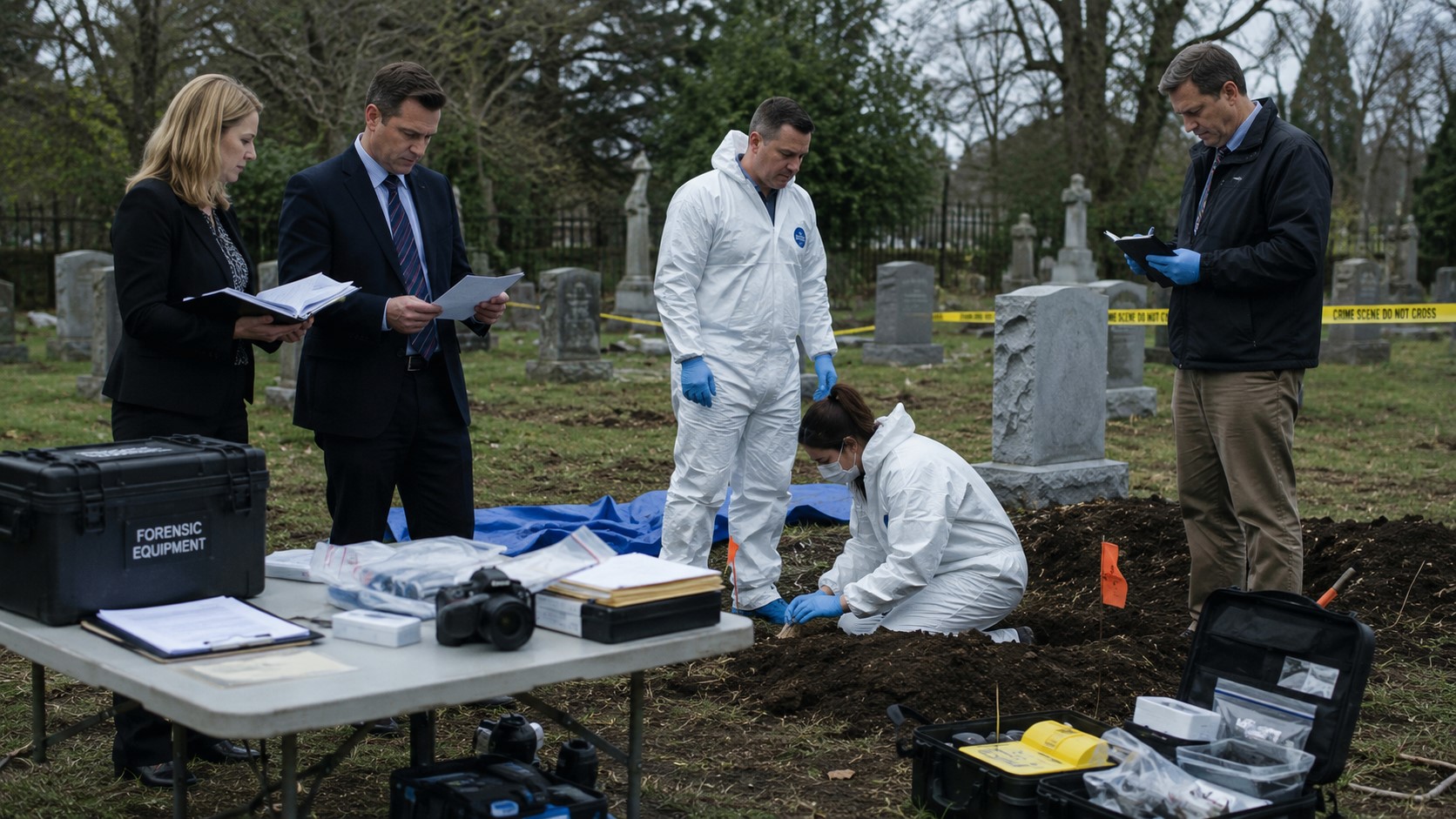
The decision to exhume human remains is never taken lightly. For families, it can be an emotional and deeply personal matter. For courts, it is a legal process that requires balancing the need for evidence against the dignity of the deceased and the interests of surviving relatives.
Although exhumation is often associated with criminal investigations, court-ordered exhumations occur in a wide range of legal and forensic matters. Questions involving paternity, inheritance rights, identity verification, and unresolved investigations can sometimes only be answered by examining biological evidence from buried remains.
When alternative sources of evidence are unavailable, courts may determine that reopening a burial is necessary to obtain scientifically reliable information. Laboratories such as The Carlson Company help support these efforts by providing forensic testing services that assist attorneys, investigators, and families in complex postmortem cases.
Why Courts Sometimes Authorize Exhumation
Courts generally view exhumation as a last resort. Before approving a request, judges must be convinced that the evidence sought is important and cannot reasonably be obtained through less intrusive means.
Several situations commonly lead to exhumation petitions.
Establishing Paternity After Death
One of the most common reasons for exhumation is determining biological parentage after an individual’s death.
Paternity disputes may arise during probate proceedings, inheritance claims, Social Security benefit applications, or other legal matters where proof of a biological relationship is required. When no suitable DNA samples are available from personal belongings, medical records, or living relatives, exhumation may be considered necessary.
Inheritance and Estate Disputes
Questions regarding heirs and beneficiaries sometimes emerge years after a person’s death. When inheritance rights depend on establishing a biological relationship, courts may authorize exhumation to obtain evidence capable of confirming or disproving a claim.
Because estate disputes often involve significant financial interests, scientifically reliable evidence can play a critical role in resolving competing claims.
Identifying Human Remains
Exhumation may also be ordered when uncertainty exists regarding the identity of buried remains.
For example, new evidence may suggest that remains were misidentified, historical records may be incomplete, or surviving family members may seek confirmation of identity. In such cases, forensic testing can provide answers that traditional documentation alone cannot.
Criminal Investigations
Although less common than portrayed in television dramas, exhumation can be an important tool in certain criminal investigations.
Law enforcement agencies may seek court approval when new evidence emerges, when prior findings require verification, or when advances in forensic science make additional testing possible.
Legal Requirements for Reopening a Burial
A court does not grant exhumation simply because someone requests it. Judges must determine whether sufficient legal grounds exist to justify disturbing a burial site.
One of the most important considerations is necessity. The requesting party must demonstrate that the evidence sought is directly relevant to an ongoing legal matter and that alternative sources of information are unavailable or insufficient.
Courts also evaluate the likely value of the evidence. If testing has a reasonable chance of answering a significant legal question, approval may be more likely. Conversely, if the requested examination is unlikely to provide meaningful information, the petition may be denied.
Family interests often play a role as well. Surviving relatives may support or oppose the request, and courts frequently consider these viewpoints alongside religious, cultural, and ethical concerns.
Ultimately, judges must balance the need for evidence against the public interest in preserving the dignity of the deceased and respecting established burial sites.
How the Court Approval Process Works
The process of obtaining permission for exhumation varies by state, but the general procedure is often similar.
A petition is typically filed with the appropriate court explaining why exhumation is being requested, what evidence is expected to be obtained, and why alternative methods are inadequate. Supporting documentation may be required to establish the necessity of the request.
Interested parties, including family members or estate representatives, are often notified and given an opportunity to respond. In some cases, hearings may be held so that attorneys, witnesses, or experts can present evidence and legal arguments.
After reviewing all relevant information, the court determines whether exhumation is justified. If approval is granted, the judge usually issues a formal order outlining how the process must be conducted.
The order may address matters such as:
- Authorized personnel
- Evidence collection procedures
- Chain-of-custody requirements
- Laboratory testing protocols
- Reinterment arrangements
These safeguards help ensure that evidence is collected properly and remains admissible for legal purposes.
Why DNA Evidence Often Drives Exhumation Requests
In many exhumation cases, the ultimate goal is obtaining biological evidence that can answer a specific legal or investigative question.
Modern DNA analysis has transformed the way courts, investigators, and families approach identity and relationship verification. Even when remains have been buried for many years, advances in forensic science may allow specialists to recover usable genetic material from bones, teeth, or other preserved biological samples.
DNA evidence can help:
- Confirm or exclude biological relationships
- Establish paternity after death
- Verify the identity of unknown remains
- Support inheritance and probate claims
- Assist with missing person investigations
The ability to obtain reliable genetic information has made DNA testing one of the most important reasons courts authorize exhumation today.
However, successful DNA recovery is not guaranteed. Factors such as environmental exposure, preservation conditions, and the condition of the remains can all influence testing outcomes. For this reason, forensic specialists typically evaluate each case individually before determining the most appropriate testing strategy.
Also Read: Legal Battles and DNA Evidence: How Exhumation Plays a Role in Settling Estate Disputes
Who Can Request an Exhumation?
The right to request exhumation depends on state laws and the circumstances of the case.
Parties commonly involved in exhumation petitions include:
- Surviving family members
- Estate executors or administrators
- Attorneys representing interested parties
- Government agencies
- Law enforcement authorities
- Individuals seeking to establish biological relationships
Having the ability to file a petition does not guarantee approval. Courts still require evidence demonstrating that exhumation is necessary and legally justified.
In many situations, judges prefer alternative methods when they are available, particularly if suitable biological samples can be obtained without disturbing the burial site.
What Happens After a Court Approves Exhumation?
Once a court authorizes exhumation, the focus shifts to evidence collection and forensic examination.
Qualified professionals recover the remains according to the court’s instructions and established forensic procedures. Biological samples suitable for testing are carefully collected, documented, and preserved to protect their integrity.
Maintaining chain of custody is essential throughout the process. Every stage of evidence handling must be documented to ensure that testing results remain reliable and legally defensible.
Following sample collection, forensic laboratories evaluate the material and perform the necessary testing. Depending on the purpose of the investigation, DNA profiles may be compared with reference samples from biological relatives or other known sources.
After testing is complete, findings are compiled into formal reports that may be used in court proceedings, probate matters, or investigative reviews. The remains are then generally reinterred in accordance with legal requirements and family wishes.
Seeking Professional Support for Complex Cases
Exhumation cases involve legal procedures, forensic protocols, and scientific analysis that often require specialized expertise.
Attorneys, investigators, forensic specialists, and laboratory professionals frequently work together to ensure that evidence is collected properly and that testing is conducted according to accepted standards. Organizations offering Court-ordered exhumation and DNA testing services can help coordinate these efforts while maintaining compliance with chain-of-custody requirements and forensic best practices.
Because opportunities for evidence collection may be limited, careful planning from the outset can help maximize the likelihood of obtaining reliable results while minimizing procedural complications.
Conclusion
Court-ordered exhumation is one of the most sensitive actions a court can authorize. It involves balancing legal necessity with respect for the deceased and the concerns of surviving family members.
Yet there are circumstances where reopening a burial may be the only practical way to answer important questions involving identity, biological relationships, inheritance rights, or unresolved investigations. When supported by appropriate legal authority and sound forensic procedures, exhumation can provide evidence that helps families, attorneys, and courts reach informed conclusions.
As forensic science continues to advance, exhumation remains an important tool for obtaining reliable evidence in cases where other options are unavailable, helping bring clarity and resolution to matters that might otherwise remain unanswered.
Frequently Asked Questions
How difficult is it to obtain a court order for exhumation?
Courts generally require a compelling legal reason and evidence that less intrusive alternatives are unavailable.
Can DNA still be recovered after many years of burial?
In many cases, yes. Success depends on preservation conditions, environmental factors, and the type of biological material available.
What types of cases commonly involve exhumation?
Paternity disputes, inheritance claims, missing person investigations, identity verification matters, and certain criminal investigations.
Can family members object to an exhumation?
Yes. Courts often consider family objections, although the final decision rests with the judge.
Are exhumation results admissible in court?
Evidence obtained through properly authorized and documented procedures may be admissible in legal proceedings.
Is exhumation always necessary for postmortem DNA testing?
No. Alternative DNA sources may sometimes be available and are often considered before exhumation is pursued.
