
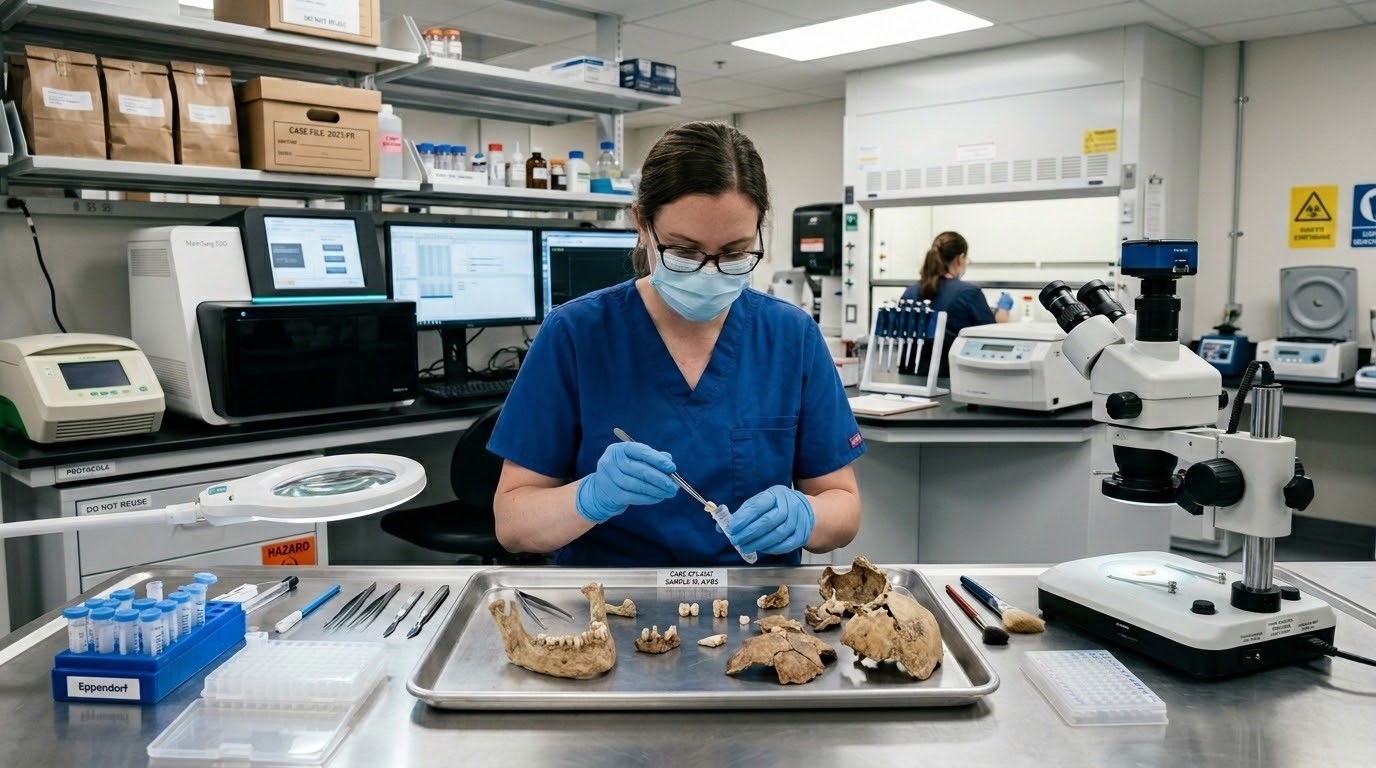
Human identification has long been one of the most important applications of forensic science. Whether investigators are working to identify unknown remains, families are seeking answers about a missing loved one, or legal professionals require scientifically reliable evidence, DNA analysis often plays a critical role.
One of the most common questions people ask is whether DNA can still be recovered from human remains after significant decomposition or the passage of time. The answer is often yes, but the success of recovery depends on several factors, including the condition of the remains, environmental exposure, and the methods used during analysis.
Understanding what is possible, and what limitations may exist can help individuals, families, attorneys, and investigators make informed decisions when considering DNA analysis.
Why DNA Recovery From Human Remains Matters
DNA is unique to each individual, making it one of the most powerful tools available for human identification. Unlike visual identification methods, DNA analysis can provide scientific evidence that supports identity verification even when remains are severely decomposed or damaged.
DNA recovery from human remains may be used in situations involving:
-
- Unidentified remains
- Missing person investigations
- Historical identification projects
- Mass fatality incidents
- Family relationship verification
- Legal and probate matters
In many cases, DNA evidence can help provide clarity when other forms of identification are no longer possible.
What Types of Human Remains Can Yield DNA?
Many people assume DNA can only be recovered from fresh biological material. In reality, forensic scientists can often obtain DNA from a variety of human remains under the right circumstances.
The likelihood of successful DNA recovery depends on the preservation of biological material rather than the age of the remains alone.
Skeletal Remains
Bones are among the most valuable sources of DNA in forensic investigations. Dense bones often protect genetic material from environmental degradation better than soft tissue.
Long bones, such as the femur, and certain areas of the skull may provide viable DNA even years after death.
Teeth
Teeth are frequently considered one of the best sources of DNA from human remains.
Because teeth are highly durable and resistant to environmental damage, the dental pulp inside can sometimes preserve DNA when other tissues have deteriorated.
Soft Tissue
When preserved soft tissue is available, it may offer an excellent source of DNA. However, environmental conditions can significantly affect preservation and quality.
Hair
Hair may contain usable DNA depending on whether the root is present. While hair shafts can sometimes provide genetic information, rooted hair generally offers a greater chance of successful analysis.
How Forensic Scientists Recover DNA From Human Remains
Recovering DNA from human remains requires specialized laboratory procedures designed to maximize the chances of obtaining usable genetic material while minimizing contamination.
The process varies depending on the sample type, but generally follows several key stages.
Initial Examination
Before testing begins, forensic scientists assess the condition of the remains.
They evaluate factors such as:
-
- Sample integrity
- Degree of decomposition
- Environmental exposure
- Potential contamination
- Suitable testing methods
This assessment helps determine which sample source is most likely to yield reliable results.
Sample Preparation
Once a suitable sample is selected, technicians carefully prepare the material for analysis.
For bone and tooth samples, this often involves cleaning the exterior surface to remove contaminants before extracting material from protected internal areas.
The goal is to isolate DNA while reducing the risk of interference from external sources.
DNA Extraction
Extraction is the process of separating DNA from the surrounding biological material.
Depending on the condition of the remains, laboratories may use specialized techniques designed for degraded or limited samples.
This stage is often one of the most critical parts of the entire process because degraded samples require careful handling to preserve whatever genetic material remains.
DNA Profiling
After extraction, scientists analyze specific genetic markers that can be used to create a DNA profile.
The resulting profile may then be compared against:
-
- Reference samples from relatives
- Previously collected DNA profiles
- Investigative databases when appropriate
- Other biological evidence
These comparisons help establish identity or biological relationships.
Factors That Affect DNA Recovery Success
Not all human remains yield the same quality of DNA.
Several factors influence whether genetic material can be successfully recovered and analyzed.
Environmental Conditions
The environment plays a significant role in DNA preservation.
Heat, moisture, sunlight, and microbial activity can accelerate degradation.
For example, remains exposed to extreme temperatures or prolonged water exposure may experience faster DNA deterioration than those stored in stable conditions.
Time Since Death
While time is an important factor, it is not always the determining factor.
Some remains that are decades old have yielded usable DNA, while more recent remains exposed to harsh environmental conditions may provide limited genetic material.
The quality of preservation often matters more than age alone.
Sample Type
Different biological materials preserve DNA differently.
Teeth and dense bones generally offer better protection than exposed soft tissues, making them valuable sources for forensic identification.
Handling and Storage
Improper handling can introduce contamination or accelerate degradation.
This is why laboratories follow strict procedures designed to preserve sample integrity throughout the testing process.
When Identification Becomes More Challenging
While DNA analysis is a powerful tool, some situations present unique challenges.
Highly degraded remains may contain fragmented DNA that is difficult to analyze using conventional methods.
Environmental contamination can further complicate testing.
In certain cases, forensic scientists must work with extremely small quantities of genetic material, requiring advanced laboratory techniques and careful interpretation.
These challenges do not necessarily make identification impossible, but they may affect the scope or certainty of the results obtained.
Real-World Applications of DNA Analysis
DNA recovery from human remains is used in a variety of forensic and legal contexts.
Missing Person Investigations
When unidentified remains are discovered, DNA analysis may help establish a connection with family members of missing individuals.
Comparisons with relatives can provide valuable investigative leads and, in some cases, definitive identification.
Disaster Victim Identification
Mass casualty events often require scientific methods capable of identifying multiple individuals when traditional identification methods are not available.
DNA analysis has become a critical component of these efforts worldwide.
Historical and Archaeological Cases
DNA testing is not limited to modern investigations.
Researchers have successfully analyzed historical remains to answer questions about ancestry, lineage, and identity.
Family Relationship Verification
In some situations, DNA recovered from remains may be used to evaluate biological relationships between individuals.
Also Read : Things You Should Know About DNA Testing
Common Misconceptions About DNA Recovery
Misunderstandings about forensic DNA analysis are common. Let’s address a few of the most frequent myths.
1. DNA Can Always Be Recovered
Not necessarily.
While DNA is remarkably durable under certain conditions, some samples become too degraded to produce reliable results.
Successful recovery depends on preservation, sample type, and laboratory methodology.
2. Older Remains Never Contain Usable DNA
Age alone does not determine success.
Scientists have recovered DNA from remains that are decades, centuries, and even thousands of years old under favorable preservation conditions.
3. Any Bone Will Produce the Same Results
Different bones preserve DNA differently.
Dense skeletal structures often provide better protection than more porous materials.
4. DNA Testing Provides Instant Answers
DNA analysis is a scientific process that requires careful examination, quality control, and interpretation.
Complex cases may take time to complete accurately.
When Professional DNA Testing Should Be Considered
There are many circumstances in which professional DNA analysis may be appropriate.
These include situations where:
-
- Human remains require identification
- Family relationships need verification
- Missing person investigations are underway
- Legal questions involve identity confirmation
- Historical remains are being studied
Organizations such as The Carlson Company provide specialized forensic DNA testing services designed to support complex identification and investigative needs through scientifically validated laboratory procedures.
Also Read : Forensic DNA Testing: Precision, Reliability, and Advanced Analysis
Final Thoughts
DNA analysis has transformed the way investigators, families, and legal professionals approach human identification.
Although recovery success depends on numerous factors—including preservation conditions, sample type, and environmental exposure—modern forensic science can often recover usable DNA from remains that might once have been considered unsuitable for testing.
Whether the goal is identifying unknown remains, supporting a missing person investigation, or verifying biological relationships, DNA analysis remains one of the most powerful tools available in forensic science today.
Understanding both the possibilities and limitations of DNA recovery helps ensure realistic expectations and informed decision-making when pursuing forensic identification.
Frequently Asked Questions
Can DNA be recovered from skeletal remains?
Yes. Bones are often valuable sources of DNA, particularly dense bones that help protect genetic material from environmental degradation.
Are teeth a good source of DNA?
Yes. Teeth frequently provide some of the best opportunities for DNA recovery because they offer natural protection for genetic material.
How long after death can DNA be recovered?
There is no single timeframe. Recovery depends on preservation conditions, environmental exposure, and the type of sample available.
Can DNA testing identify unknown human remains?
In many cases, yes. DNA profiles can be compared with reference samples from relatives or other available sources to assist with identification.
Does decomposition prevent DNA testing?
Not necessarily. While decomposition can affect DNA quality, forensic scientists often recover usable genetic material from decomposed remains.
Can environmental conditions affect DNA recovery?
Yes. Heat, moisture, sunlight, and microbial activity can all contribute to DNA degradation over time.
