
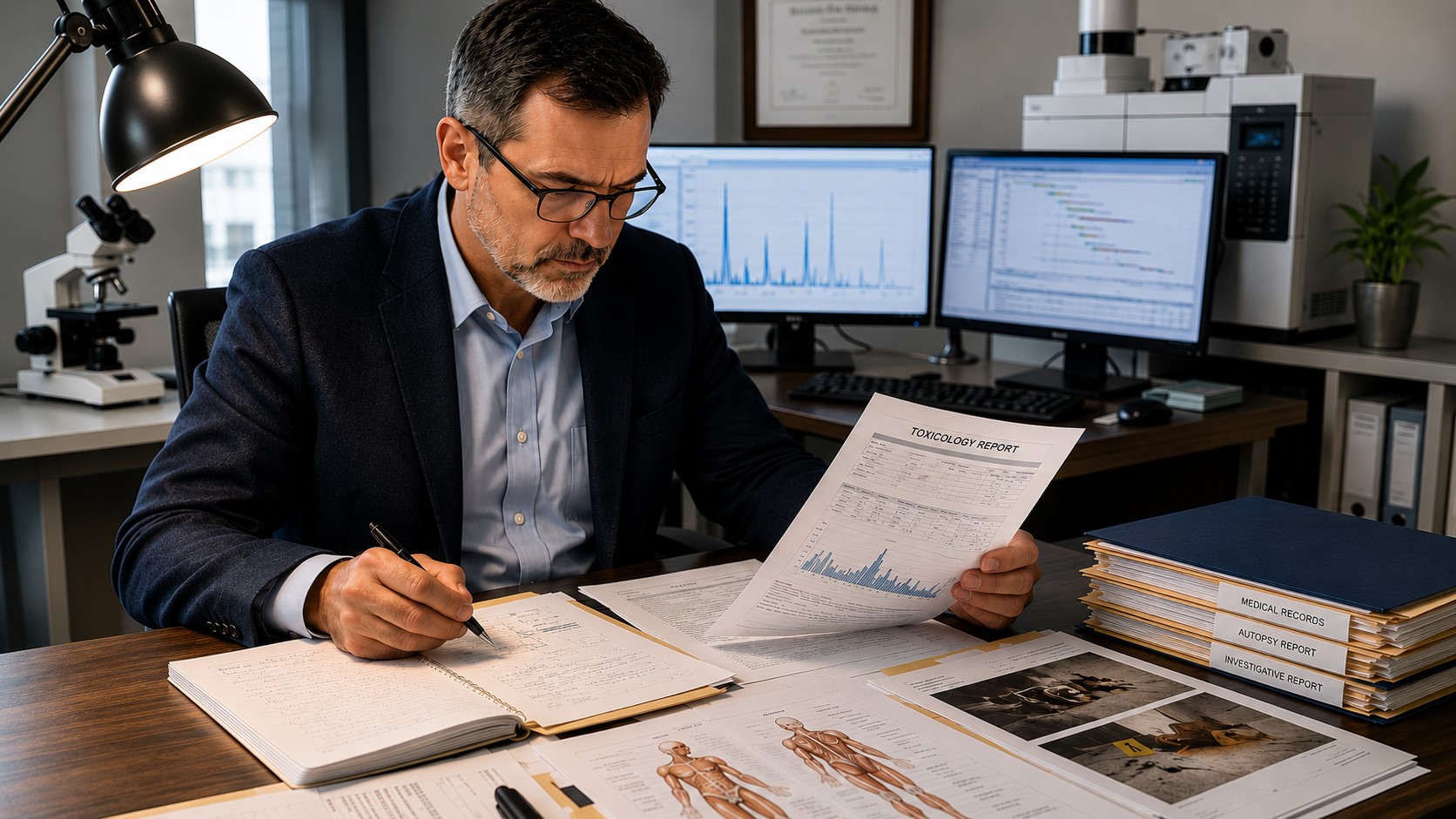
When a death is unexpected or the circumstances surrounding it are unclear, a toxicology report often becomes one of the most important pieces of evidence. It can identify the presence of drugs, alcohol, medications, toxins, or other chemical substances that may have contributed to the individual’s condition or death. However, a laboratory report is only one part of a much larger investigation.
Many people assume that a toxicology report alone provides all the answers. In reality, laboratory findings must be interpreted alongside medical records, autopsy findings, investigative reports, and other case-specific information before meaningful conclusions can be reached. Without this broader context, even accurate laboratory results can be misunderstood or assigned more significance than they deserve.
This is where Professional Toxicology Consulting becomes valuable. Rather than focusing solely on laboratory data, a toxicology consultant evaluates all available evidence to determine how toxicological findings relate to the circumstances of the case. The goal is not simply to identify what substances were present, but to understand whether those substances were medically or legally significant.
Why a Laboratory Report is Only Part of the Picture
A toxicology report answers important scientific questions, but it does not explain every aspect of a case. Laboratory analysis identifies substances that are present in a biological sample and measures their concentrations, but it does not automatically determine why those substances were present, when they were taken, or whether they contributed to injury, impairment, or death.
For example, the presence of a prescription medication does not necessarily indicate misuse. Likewise, detecting alcohol or another drug does not automatically establish intoxication or overdose. Many substances remain detectable long after their effects have worn off, while others may appear at concentrations that require careful interpretation based on the individual’s medical history and physiological condition.
A toxicology consultant examines the laboratory findings within the broader context of the investigation rather than viewing them in isolation. This comprehensive approach helps ensure that scientific evidence is interpreted accurately and objectively.
The Toxicology Report: The Foundation of Every Case Review
The toxicology report serves as the starting point for nearly every consultation. It documents which substances were detected, the concentrations identified, the biological samples that were analyzed, and the laboratory methods used during testing.
An experienced consultant carefully reviews this information to understand what the laboratory findings reveal and, equally important, what they do not reveal. Questions often considered during this stage include:
- Were all relevant substances included in the testing panel?
- Were appropriate biological samples analyzed?
- Could additional testing provide useful information?
- Do the reported concentrations align with the known pharmacological effects of the substances?
- Are there analytical limitations that should be considered when interpreting the results?
Understanding how laboratory testing is performed is equally important. Modern GC-MS testing and other advanced analytical methods provide highly accurate compound identification, but laboratory results must still be interpreted within the medical and investigative context of each individual case.
Reviewing Autopsy Findings
An autopsy provides critical medical information that laboratory testing alone cannot offer. While toxicology identifies substances within the body, the autopsy documents physical findings that help explain how those substances may or may not have affected the individual.
During a case review, consultants often evaluate:
- The certified cause and manner of death
- Organ pathology and disease processes
- Evidence of trauma or injury
- Internal findings involving the heart, lungs, liver, brain, and other organs
- Histological examination results, when available
These findings frequently provide important context for interpreting toxicology results. For example, an underlying cardiac condition may explain why a medication concentration that appears therapeutic could still have contributed to a fatal event. Likewise, significant traumatic injuries may indicate that toxicological findings played little or no role in the cause of death.
In many investigations, postmortem toxicology helps uncover contributing factors that are not immediately apparent during the initial examination.
Rather than treating the autopsy and toxicology report as separate pieces of evidence, consultants evaluate how they complement one another to develop a more complete understanding of the case.
Medical Records Often Tell the Rest of the Story
Medical history is another essential component of a comprehensive toxicology review. Laboratory findings become far more meaningful when evaluated alongside information about the individual’s health, prescribed medications, previous diagnoses, and recent medical treatment.
Medical records may reveal conditions that influence how drugs are absorbed, metabolized, or eliminated from the body. Chronic liver disease, kidney impairment, cardiovascular disorders, or respiratory illness can all affect how medications behave and how toxicology findings should be interpreted.
Consultants also review prescription histories to determine whether detected medications were prescribed appropriately, whether multiple drugs could have interacted, and whether documented treatment aligns with the laboratory findings. In many cases, this information helps explain why a substance was present and whether its concentration would reasonably be expected based on the individual’s medical history.
Understanding the clinical background helps ensure that toxicological evidence is interpreted within the context of the person’s overall health rather than as an isolated laboratory result.
Emergency Medical and Hospital Records Provide Important Context
Events occurring immediately before death often influence how toxicology findings should be interpreted. Emergency medical services (EMS) reports and hospital records document treatments, medications, and clinical observations that may affect both the patient’s condition and subsequent laboratory findings.
Consultants frequently review these records to determine:
- What symptoms were observed before treatment began.
- Which medications were administered by emergency responders or hospital staff.
- Whether life-saving interventions may have influenced laboratory findings.
- How the patient’s condition changed between initial medical contact and death.
This information helps establish an accurate timeline of events and provides valuable insight into the individual’s clinical condition before laboratory samples were collected.
Scene Investigation Reports Help Complete the Timeline
Laboratory findings become much more meaningful when they are evaluated alongside information gathered at the scene. Law enforcement reports, photographs, witness observations, and emergency response records often provide details that explain how the events unfolded before death.
A toxicology consultant reviews scene investigation records to understand factors such as where the individual was found, whether medications or chemicals were present, signs of possible exposure, and any evidence that may support or contradict the laboratory findings. These observations help place toxicology results into a real-world context rather than viewing them as isolated scientific data.
In some cases, the scene investigation may reveal information that prompts additional questions or identifies areas where further laboratory testing could provide greater clarity.
Prescription and Pharmacy Records
Prescription records often provide valuable insight into whether detected medications were prescribed, when they were dispensed, and how they fit into the individual’s medical history. Reviewing this information helps distinguish legitimate medical treatment from possible misuse, accidental exposure, or unauthorized drug use.
A consultant may compare pharmacy records with the toxicology findings to determine whether detected drugs were expected, whether multiple medications could have interacted, or whether the laboratory results differ from the documented treatment history. This comparison is particularly important when several prescription medications are involved.
Rather than relying on toxicology results alone, consultants evaluate how prescription history supports—or challenges—the overall interpretation of the case.
Witness Statements and Family Information
While witness statements are not scientific evidence, they often provide important context that cannot be obtained through laboratory testing alone. Family members, caregivers, coworkers, or first responders may describe behavioral changes, recent symptoms, medication use, or unusual events before the individual became ill or died.
These observations can help establish a timeline, identify potential exposures, or explain circumstances that may not be reflected in medical records. Although every statement must be considered carefully, combining eyewitness information with laboratory findings can lead to a more complete understanding of the case.
A consultant evaluates this information objectively and considers how it aligns with the available medical, investigative, and toxicological evidence.
Why Every Piece of Evidence Matters
No single document provides all the answers in a toxicology case. A laboratory report may identify substances that were present, but it cannot independently explain how those substances affected the individual or whether they contributed to the outcome being investigated.
A comprehensive review combines multiple sources of information to answer important questions, including:
- Do the toxicology findings support the certified cause of death?
- Could an underlying medical condition have influenced the laboratory results?
- Were prescribed medications used appropriately?
- Do the investigative findings support the toxicological evidence?
- Is additional laboratory testing or expert review warranted?
Evaluating these questions together allows consultants to develop conclusions that are scientifically supported and consistent with the available evidence.
How Toxicology Consultants Form an Independent Opinion
After reviewing all available records, a consultant evaluates how the scientific findings fit within the broader medical and investigative context. This process requires careful analysis of laboratory data, clinical history, pathology findings, and the documented circumstances surrounding the case.
Rather than focusing on a single report, consultants consider how each piece of evidence supports—or challenges—the overall interpretation. When information appears inconsistent, they identify possible explanations and determine whether additional testing or documentation may be needed before reaching a conclusion.
This comprehensive approach is a defining feature of forensic toxicology, where laboratory findings are interpreted alongside medical and investigative evidence to provide scientifically supported opinions for legal, medical, and private matters.
Bringing the Evidence Together
Independent case reviews help ensure that laboratory findings are interpreted within the full context of the available evidence rather than in isolation. By examining toxicology reports alongside medical records, autopsy findings, prescription history, emergency medical records, and investigative documentation, consultants can develop a more accurate understanding of the circumstances surrounding a case.
The Carlson Company provides independent toxicology case reviews for attorneys, investigators, families, medical professionals, and other clients seeking expert interpretation of complex toxicological findings. A comprehensive review helps identify whether the available evidence supports the reported conclusions and whether additional scientific evaluation may be beneficial.
Conclusion
A toxicology report is one of the most valuable pieces of evidence in many death investigations, but it rarely tells the entire story on its own. Meaningful interpretation requires a careful review of the laboratory findings alongside medical history, autopsy results, prescription records, emergency medical documentation, and investigative evidence.
When these sources of information are evaluated together, they provide a clearer understanding of what the laboratory findings mean and how they relate to the circumstances of the case. This comprehensive approach supports informed decision-making and helps ensure that scientific evidence is interpreted accurately, objectively, and within the appropriate medical and legal context.
Frequently Asked Questions
1. What does a toxicology consultant review during a case?
A toxicology consultant reviews much more than the laboratory report. Depending on the case, they may evaluate autopsy findings, medical records, prescription history, emergency medical records, investigative reports, witness statements, and other supporting documentation before forming an independent opinion.
2. Why isn’t a toxicology report enough on its own?
A toxicology report identifies substances and their concentrations, but it does not explain how those findings relate to the individual’s medical history, underlying health conditions, or the circumstances surrounding the case. Additional records provide the context needed for accurate interpretation.
3. Can medical records change how toxicology results are interpreted?
Yes. Medical history, prescription medications, chronic illnesses, and recent treatments can all influence how toxicology findings should be understood. Reviewing these records helps determine whether laboratory results are consistent with the individual’s overall clinical condition.
4. Why are autopsy findings important during a toxicology review?
Autopsy findings provide medical evidence about injuries, disease processes, and organ conditions that may explain or influence toxicology results. Reviewing both together provides a more complete assessment than either source alone.
5. Who may benefit from an independent toxicology case review?
Independent toxicology reviews may benefit attorneys, investigators, healthcare professionals, insurance representatives, and families seeking expert interpretation of complex laboratory findings or additional scientific insight into a case.
