
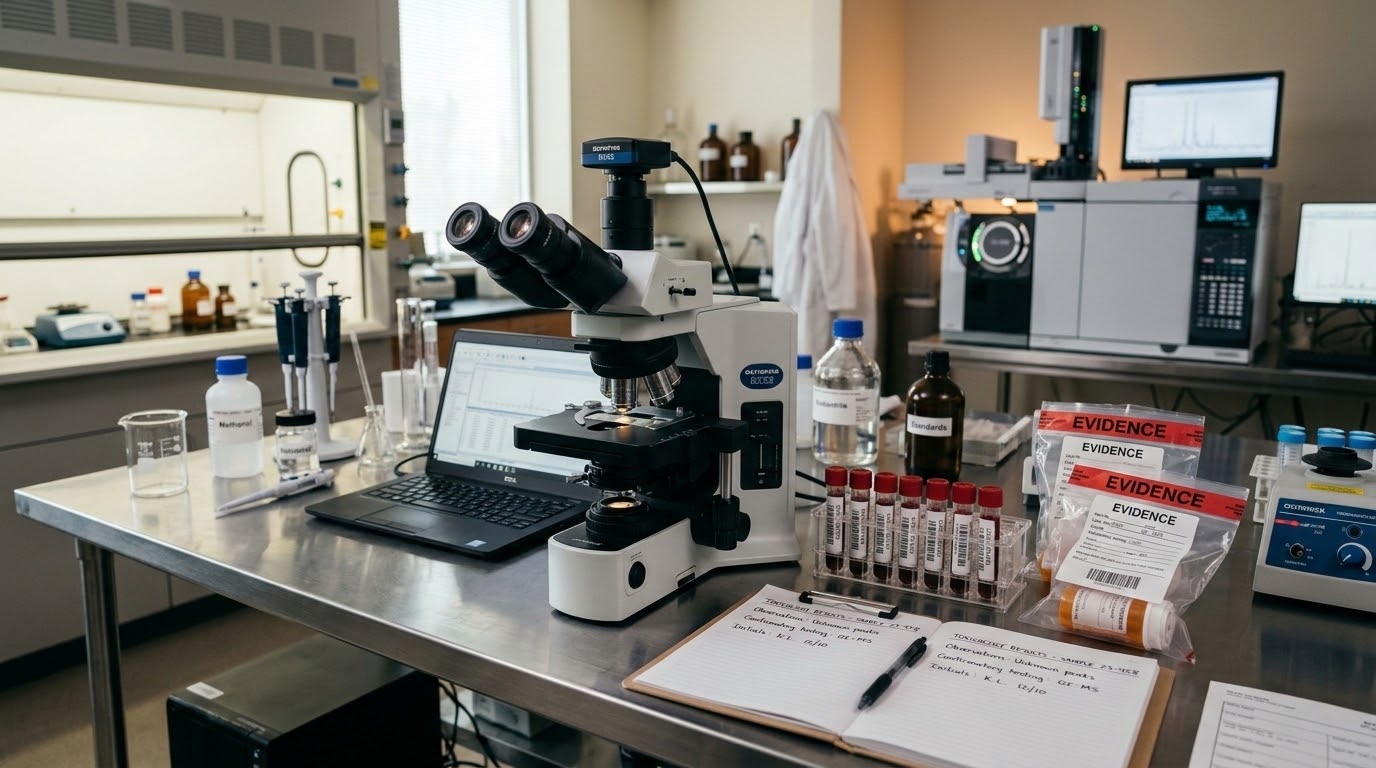
Suspecting poisoning can be frightening and overwhelming. Whether the concern involves contaminated food, toxic chemicals, medication exposure, or intentional harm, uncertainty often makes the situation even more stressful.
One of the biggest mistakes people make is waiting too long to take action.
The good news is that modern toxicology and forensic testing methods can often detect harmful substances when the right steps are taken early. Understanding what to do—and what not to do—can help preserve important evidence, support medical care, and provide clarity during a difficult situation.
This guide explains the essential steps to take if you suspect poisoning, how toxicology testing works, and why timing matters.
Step 1: Seek Emergency Medical Help if Symptoms Are Severe
If someone is experiencing severe symptoms, medical attention should always come first.
Call 911 or contact Poison Control immediately if symptoms include:
- Difficulty breathing
- Loss of consciousness
- Seizures
- Chest pain
- Severe vomiting
- Sudden confusion
- Blue lips or skin
- Extreme drowsiness
In the United States, the Poison Help hotline (1-800-222-1222) provides free, confidential guidance 24/7.
Even if symptoms seem mild at first, certain toxic substances can worsen rapidly over time.
Step 2: Do Not Throw Away Potential Evidence
One of the most important steps is preserving anything that could help identify a toxic substance.
This may include:
- Food or beverages
- Medication bottles
- Powders or unknown substances
- Supplements
- Containers or packaging
- Vomit samples (when medically advised)
Avoid cleaning or discarding these materials until medical professionals or forensic experts advise otherwise.
Evidence preservation can significantly improve the accuracy of future toxicology analysis.
Step 3: Document Symptoms and Timing
Creating a timeline can be extremely helpful for both medical professionals and forensic investigators.
Write down:
- When symptoms started
- What was eaten or consumed beforehand
- Environmental exposures
- Medications taken
- Changes in physical or mental condition
- Names of possible witnesses
Even small details may become important later.
Symptoms can vary depending on the substance involved. Some toxins act immediately, while others develop gradually over several hours or days.
Step 4: Avoid Self-Treating Without Medical Guidance
Many people attempt home remedies after suspected poisoning. Unfortunately, this can sometimes make the situation worse.
Avoid:
- Inducing vomiting unless instructed by professionals
- Taking random medications or supplements
- Drinking large amounts of water to “flush out” toxins
- Delaying medical evaluation
Different toxins require different responses. Proper medical guidance is essential.
Step 5: Understand That Poisoning Symptoms Can Mimic Other Conditions
One reason poisoning cases are difficult to identify is because symptoms often resemble common illnesses.
Possible symptoms may include:
- Nausea
- Dizziness
- Fatigue
- Headaches
- Abdominal pain
- Confusion
- Muscle weakness
- Changes in heart rate
In some cases, symptoms may appear slowly over time, particularly with repeated or long-term exposure.
Some toxic exposures are not immediately obvious and may stem from everyday household items, environmental contaminants, or long-term chemical exposure that often goes unnoticed.
Step 6: Consider Professional Toxicology Analysis
If poisoning is suspected, laboratory testing may help identify or rule out toxic exposure.
Modern poison testing can analyze various sample types, including:
- Blood
- Urine
- Hair
- Food samples
- Water samples
- Ashes or tissue samples in forensic investigations
Different testing methods are used depending on:
- the suspected substance
- the exposure timeline
- the type of evidence available
Advanced laboratories often use highly sensitive techniques capable of detecting trace amounts of chemicals and toxins.
Step 7: Timing Matters More Than Most People Realize
One of the most important factors in toxicology is how quickly testing occurs.
Some substances:
- leave the bloodstream within hours
- become difficult to detect after a few days
Others may remain detectable for longer periods in hair or tissue samples.
This is why understanding How long drugs & poisons stay detectable in the body
can be critical when deciding whether testing may still be useful.
The sooner evidence is collected, the greater the likelihood of accurate results.
Step 8: Preserve Chain of Custody When Possible
In situations involving legal disputes, investigations, or workplace concerns, chain of custody becomes extremely important.
This refers to documented handling procedures that:
- track who collected the sample
- record storage conditions
- verify sample integrity
Improper handling can compromise evidence or raise questions about reliability.
Professional forensic laboratories follow strict procedures to maintain sample authenticity throughout the testing process.
Step 9: Know That Different Poisons Require Different Testing Methods
Not all toxins are detected the same way.
For example:
- heavy metals may require blood or hair analysis
- volatile chemicals may require rapid testing
- food contaminants often require specialized laboratory screening
This is why generalized drug tests are not always sufficient.
More advanced testing approaches are often necessary in complex cases, including methods discussed in Advanced Blood Testing Methods for Rare Chemical Poisons.
Step 10: Don’t Ignore Long-Term or Unexplained Symptoms
Not all poisoning cases involve sudden emergencies.
Some toxic exposures occur gradually through:
- environmental contamination
- repeated chemical exposure
- contaminated food or water
- chronic heavy metal exposure
Long-term symptoms can sometimes include:
- memory issues
- fatigue
- neurological changes
- digestive problems
When symptoms remain unexplained, toxicology analysis may help identify potential exposure patterns.
What Happens During Toxicology Testing?
Many people assume toxicology testing is simple, but forensic analysis is often highly specialized.
Laboratories may use:
- Gas Chromatography-Mass Spectrometry (GC-MS)
- Liquid Chromatography
- Spectroscopy
- Elemental analysis
These techniques help experts:
- separate chemicals
- identify substances
- measure concentration levels
In some forensic cases, toxicology analysis may also help investigators determine whether toxic substances can still be detected in cremated remains or other postmortem samples.
Can Poisoning Always Be Proven?
Not always.
Several factors affect whether substances can be detected:
- timing
- sample quality
- metabolism
- type of toxin
- environmental degradation
A negative result does not always mean exposure never occurred.
However, reliable testing can still provide valuable scientific information that helps guide medical or legal decisions.
Choosing a Reliable Testing Provider
Because toxicology analysis is highly specialized, selecting an experienced provider matters.
A qualified laboratory should:
- use validated forensic methods
- follow strict chain-of-custody procedures
- provide detailed documentation
- explain limitations clearly
Organizations such as The Carlson Company specialize in forensic laboratory analysis and toxicology services designed to help individuals better understand possible toxic exposures.
Common Misconceptions About Poisoning
“If symptoms disappeared, there’s nothing to worry about.”
Not necessarily. Some toxins cause delayed or long-term effects.
“Hospitals automatically test for every poison.”
Most standard hospital screenings are limited and may not include specialized toxins.
“Home drug tests can detect poisoning.”
Many over-the-counter tests cannot identify rare chemicals, heavy metals, or environmental toxins.
Key Takeaways
- Seek emergency help immediately for severe symptoms
- Preserve possible evidence whenever possible
- Timing plays a major role in successful detection
- Different toxins require different testing methods
- Toxicology testing can provide valuable answers, even when certainty is difficult
Final Thoughts
Suspected poisoning situations can feel confusing, stressful, and emotionally overwhelming. But taking calm, informed steps early can make a major difference.
Medical care should always come first. After immediate safety concerns are addressed, proper evidence preservation and professional toxicology analysis may help uncover important answers.
Even when results cannot explain every detail, forensic science can still provide clarity, reassurance, and valuable information for families, investigators, and medical professionals alike.
Frequently Asked Questions (FAQs)
1. What should I do first if I suspect poisoning?
Seek emergency medical help immediately if symptoms are severe. Contact Poison Control or call 911 for urgent guidance.
2. Can poisoning be detected after several days?
Sometimes. Detection depends on the substance involved and the type of sample available. Hair testing may detect some toxins longer than blood or urine testing.
3. What samples are used in poison testing?
Common samples include blood, urine, hair, food, beverages, and environmental materials.
4. Should I keep possible evidence?
Yes. Preserving food, drinks, medications, or containers may help toxicology experts identify harmful substances.
5. Are standard hospital tests enough?
Not always. Some toxins require advanced forensic testing methods that are not included in standard screenings.
