
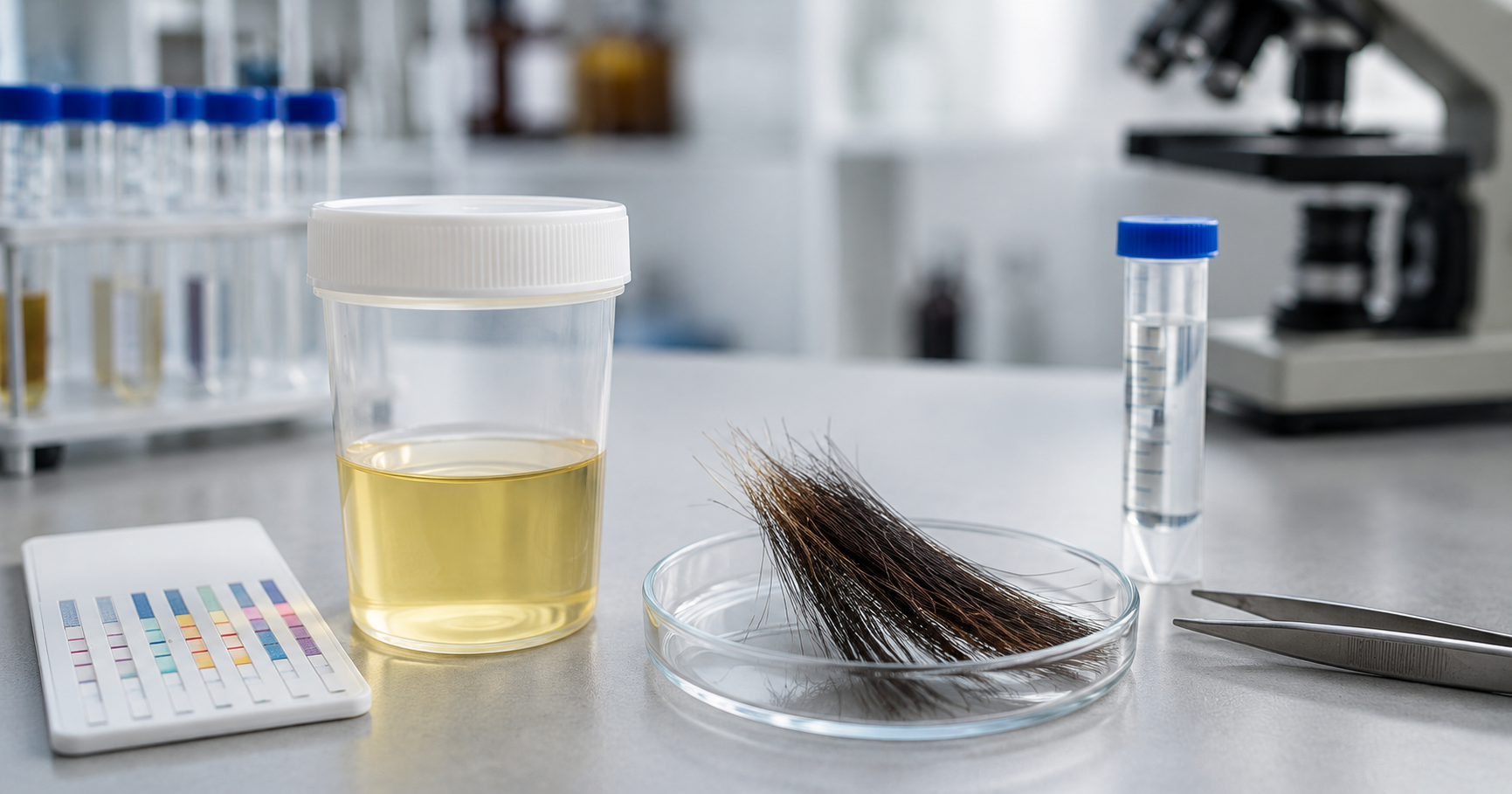
It’s a question our lab in Westminster, Colorado hears often, from parents in custody disputes, employees disputing a workplace result, and attorneys trying to make sense of two lab reports that don’t seem to agree: how can one test come back negative and another, taken around the same time, come back positive? Or the reverse?
The short answer is that urine and hair tests aren’t measuring the same thing. They’re measuring different biological evidence over different time frames.
Understanding why matters, especially when results are being used for legal, custody, or employment decisions across the US, where lab documentation can play an important role in real-world decisions.
They Measure Different Time Windows, Not the Same Moment
This is the single biggest reason results can conflict.
A urine test generally detects more recent drug exposure, but the detection window varies depending on the substance, amount used, frequency of use and other factors. A hair test can reflect a much longer history, generally up to about 90 days for a standard 1.5-inch sample of head hair.
So a negative urine test may simply mean there was no detectable use within its relatively short detection window. It does not provide the same historical information as a hair test.
Hair Testing Has a Lag Period Urine Testing Doesn’t
Hair tests can’t detect very recent use immediately. Drug metabolites need time to become incorporated into the portion of the hair that is available for collection and analysis.
This creates a real gap: someone who used a substance shortly before testing could show negative on a hair test because that exposure has not yet become detectable in the collected hair, while a urine test taken around the same time may detect the recent exposure.
This isn’t a flaw in either test. It’s a difference in what each one is designed to detect.
One-Time Use Doesn’t Always Behave the Same Way in Both Tests
Urine tests are generally more suited to detecting recent exposure, including some single-use events, depending on the substance and other factors.
Hair tests are often more useful for identifying longer-term patterns of exposure. A single or occasional use may be harder to detect in hair, depending on the substance, amount used, laboratory method and analytical cutoff.
This means an isolated exposure can show up on a urine test while not appearing on a hair test taken around the same time. That difference does not necessarily mean either test is wrong.
Hair Growth Rate Varies From Person to Person
Hair grows at different rates for different people, and that timing can affect what a hair sample reveals.
Because hair growth is not identical across individuals, a hair test cannot pinpoint the precise day of use. Instead, a standard sample can provide information about a longer period, often estimated at around 90 days when 1.5 inches of head hair are tested.
That variability is one more reason a same-day comparison between the two test types isn’t a like-for-like comparison.
Attempted Tampering Affects the Two Tests Differently
Urine specimens can be affected by dilution, substitution or other forms of specimen manipulation, which is why proper collection procedures and specimen validity testing can be important in some testing programs.
Hair testing involves a different type of specimen and collection process, so short-term manipulation of a urine sample does not apply in the same way to a hair sample.
However, a difference between urine and hair results does not by itself indicate tampering. Detection windows, specimen characteristics, laboratory methods and the timing of collection should all be considered when interpreting different results.
Why This Matters in Legal and Custody Situations
Conflicting results aren’t automatically a sign that something went wrong. In many cases, they can be explained by how differently the two tests work.
Courts and employers who understand this distinction may consider the full picture. What was the purpose of each test, when were they collected relative to each other, and what does each detection window actually cover?
This is part of why documented chain of custody procedures matter so much. A properly documented test, run through an accredited lab, provides a record of what was tested, when it was collected, and how the specimen was handled and analyzed.
Family courts and legal professionals may consider different types of drug testing depending on the circumstances of a case. A parent who tests negative on urine but positive on hair isn’t necessarily producing contradictory evidence. The results may reflect different periods of potential exposure.
The same principle applies in workplace testing. The appropriate testing method depends on the requirements of the testing program and whether the goal is to identify recent exposure or provide information about a longer period.
What to Do If You’re Facing Conflicting Results
- Ask which test was taken first and how many days separated the two collections
- Confirm the detection window associated with each test, since factors such as substance, sample length and testing method can affect interpretation
- Request the full lab report rather than relying only on a summary, since it can provide information about the testing method and cutoff levels
- Speak with the testing laboratory or an appropriate professional if the discrepancy needs to be explained for a legal or workplace proceeding
Choosing the Right Test Before Results Become a Dispute
The appropriate test depends on what you need the testing to establish.
If you need information about very recent exposure, a urine test may be appropriate. If you need a longer historical picture, whether for a custody case, legal proceeding, workplace matter or personal reason, a hair follicle test may be more appropriate.
In situations where the stakes are high, some people choose to consider both tests from the start when they need information about both recent and longer-term exposure. Our full range of testing services covers both options, along with guidance on which may fit your specific circumstances.
If you’re navigating this for a custody case, workplace dispute, or legal matter, our team can help explain what your specific testing options may indicate. Contact us to discuss your situation directly, or read more about our lab and accreditation.
Frequently Asked Questions
Q1. If my hair test is negative, does that mean my urine test is wrong?
Not necessarily. A negative hair test does not automatically rule out recent exposure. A positive urine test may reflect recent use that has not yet become detectable in the collected hair, depending on the timing and other testing factors.
Q2. Can a hair test miss a single use of a drug?
Yes. A single or occasional exposure may be harder to detect in hair than repeated use, depending on the substance, amount used, laboratory method and analytical cutoff.
Q3. Why would someone test negative on a hair test right after testing positive on a urine test?
This can happen because hair testing has an initial lag period before very recent exposure can become detectable in the collected hair, while urine testing is generally designed to identify more recent exposure.
Q4. Does hair color or hair treatment affect how the two tests compare?
Hair characteristics and cosmetic treatment can be factors in hair testing and may be considered when interpreting results. Routine washing or styling does not simply remove drug metabolites from the hair shaft, and accredited laboratories use validated analytical procedures when testing hair samples.
Q5. Which test should be trusted more in a legal proceeding?
Neither test is inherently more trustworthy. Interpretation depends on what each test was intended to establish, the timing of collection, the substance being tested, the laboratory method and whether appropriate collection and chain of custody procedures were followed.
Q6. Should I request both tests if I’m dealing with a custody or legal case?
It may be appropriate to consider both when information about both recent and longer-term exposure is relevant. However, the right testing approach depends on the purpose of the test and the requirements of the particular case.
Q7. Can lab error explain a conflicting result instead of the detection window difference?
Laboratory error is one possible explanation, but differences in detection windows, analytical cutoffs, specimen characteristics and testing methods should also be considered. Accredited laboratories use validated methods and quality procedures to help minimise the risk of inaccurate results.
Conclusion
A conflicting result between a urine and hair test usually isn’t a contradiction. It’s a reflection of two tests built to answer different questions over different timeframes.
If you’re unsure which testing method is right for your situation, explore our drug testing and forensic toxicology services to find the option that best fits your needs.
Understanding the detection window, the hair growth lag, and how each test is collected and analyzed makes the difference between a confusing result and a clearly explainable one.
Need help understanding your testing options? Contact The Carlson Company to discuss your situation with our forensic toxicology team.
