
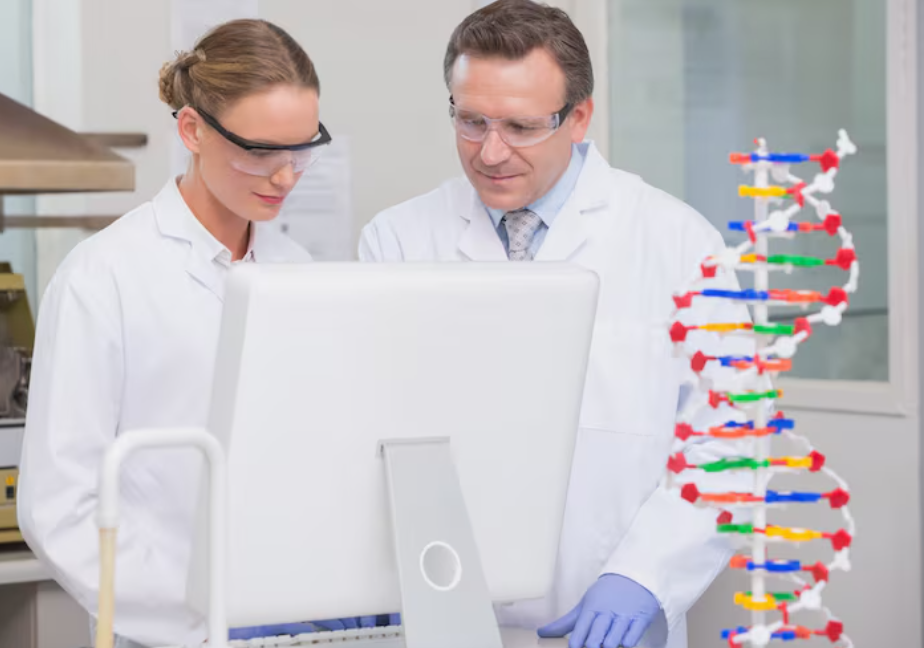
Advances in forensic DNA technology are changing the way investigators solve cases, verify identities, and analyze complicated biological samples. Two techniques at the vanguard of that shift are Rapid DNA and NGS. These technologies offer faster turnarounds, higher accuracy, and the potential to work with degraded or limited samples-challenges that plague traditional DNA testing.
As the field of forensic science continues to evolve throughout the United States, private labs such as The Carlson Company are helping attorneys, families, employers, and investigators access advanced, reliable DNA testing, which supports both personal and legal needs.
What is Rapid DNA in forensic science?
Rapid DNA refers to technologies that can process DNA profiles within hours, rather than days or weeks. Unlike traditional methods dependent upon highly trained scientists and complex workflows, Rapid DNA instruments can generate profiles directly from cheek swabs with minimal human intervention.
It is particularly useful for the following:
- Fast identity verification
- Time-sensitive legal cases
- Missing persons and disaster victim identification
- Situations that require immediate biological explanation
Because Rapid DNA reduces dependency on extensive lab workflows, the technique is an excellent tool for investigators and private labs that look to speed up results without sacrificing accuracy.
Rapid DNA vs. Traditional DNA Testing: How Does It Measure Up?
Traditional DNA testing remains the gold standard in complex forensic work. It allows deeper analysis, handles mixed samples, and supports advanced interpretation.
Rapid DNA, on the other hand:
- Works best for single-source samples
- Provides quicker results
- Supports early screening during investigations
- Helps speed up casework when preliminary answers are needed
Applications involving multiple contributors, degraded samples, or fine-scale genetic interpretation still require traditional DNA workflows or NGS methods.
How Next-Generation Sequencing Is Used in Forensics
NGS goes beyond standard STR profiling by reading thousands of DNA fragments at one time. In this way, the laboratories are able to glean more information from a sample-even if it is old, degraded, or too small for conventional testing.
Forensics makes use of NGS in:
- Complex casework involving mixed DNA
- Profiling SNP for ancestry, traits, or kinship analysis
- Identification when STR results are inconclusive
- Cold cases needing deeper genetic insights
- Deep sequencing of trace biological material
Because NGS generates richer data, it is now widely applied to support attorneys, medical examiners, and investigators working with challenging samples.
Advantages of NGS for Degraded DNA Samples
NGS has become the approach of choice for samples affected by:
- Heat
- Chemicals
- Environmental exposure
- Time decay
- Extremely low DNA quantities
Its ability to read fragments rather than whole sequences makes it ideal when traditional STR testing fails. This has been the reason why NGS transformed testing in historic remains, unsolved crimes, and cases with heavy degradation of evidence.
Advanced sequencing methods bring clarity to cases of complex DNA and toxicology regularly dealt with by the Carlson Company that traditional testing cannot match.
SNP Profiling in Forensic Investigations
SNPs are the most important markers in modern forensic investigations. NGS can read several thousand SNPs in a single run, thus helping labs:
- Establish distant familial relations
- Assess ancestry and biogeographic origins
- Support investigative genetic genealogy
- Reconstruct DNA profiles from compromised material
Genetics-based forensics, using SNPs, has played an instrumental role in cracking cold cases around the United States. In addition, private labs are increasingly relied upon for specialized SNP analysis.
Forensic Genomics Trends in the USA
Some major trends shaping this field include:
- Growing use of NGS and whole-genome–derived SNP analysis
- Expansion of Rapid DNA for immediate identity checks
- Adoption of genetic genealogy in investigations
- Increased reliance on private accredited labs for case backlogs
- Increasingly, privacy and data handling concerns
More cases requiring advanced interpretation rather than routine STR testing
The Carlson Company remains committed to these trends by offering advanced testing methods, confidential case handling, and expert interpretation for legal and private clients nationwide.
Rapid DNA Turnaround Time for Casework
One of the biggest advantages of Rapid DNA technology is speed. Results can be available:
- Within hours for simple cases
- Same-day service when legal needs are urgent
- In a short period of time when combined with confirmatory testing
Although complete forensic workflows still require expert review, Rapid DNA accelerates early investigation processes and offers direction when time is of the essence.
How Forensic Labs Use NGS for Complex Cases
NGS really shines when evidence is:
- Mixed
- Low-quality
- Partially degraded
- Partial
- Backlogged
NGS is used in forensic labs to parse out contributors, identify trace DNA, and deliver deeper genetic information, which supports stronger courtroom evidence.
With specialized toxicology and DNA resources, the Carlson Company gives attorneys and families access to high-resolution data even in highly complicated scenarios.
Ethical Concerns in Forensic DNA Sequencing
With forensic DNA ever increasing in strength, ethical concerns mount. Concerns common to:
- Privacy and consent
- Abuses of genetic genealogy databases
- Data storage and long-term accessibility
- Potential for misunderstanding in complicated scenarios
Responsible laboratories emphasize chain of custody, confidentiality, and open communications-applying the same guiding principles as The Carlson Company, independently owned and operated, not beholden to any governmental database access or surveillance program.
Future of DNA Technology in Crime Labs
Emerging developments include:
- Portable NGS devices for field use
- More detailed phenotyping by appearance prediction
- Automating workflows to lessen human error.
- AI-assisted genetic interpretation
- Wider application of Rapid DNA in civil and legal contexts
As forensic DNA technology continues to change, private labs will continue to play a prominent role in the delivery of specialized testing that fills gaps created by overcrowded public systems.
Why Choose The Carlson Company for Advanced DNA Testing
The Carlson Company supports a wide range of needs, including:
- Forensic DNA testing
- Toxicology analysis
- Specialized and complex case support
- Expert witness testimony
- Custom forensic consultation
- Rapid communication and private case handling
These clients include, but are not limited to, individuals, attorneys, law-enforcement partners, medical examiners, government bodies, and international cases submitted via chain-of-custody processes.
Frequently Asked Questions
1. For what purpose is Rapid DNA used in forensic science?
Rapid DNA serves purposes of rapid identity verification, early investigative screening, and cases that need immediate biological clarification. It’s a quicker alternative to traditional DNA testing when time is of the essence.
2. Is Next-Generation Sequencing more accurate than traditional DNA testing?
NGS provides deeper and more detailed data, and it is specifically useful in the cases of degraded, mixed, or low-quality samples. Traditional STR testing remains a standard for routine cases, while NGS is preferred for more complex analyses.
3. Can NGS solve cold cases?
Yes, NGS makes SNP profiling, advanced mixture interpretation, and genetic genealogy possible, which have solved a number of long-unsolved criminal cases all over the USA.
4. How fast is Rapid DNA testing?
Results can be available within hours for simple samples. In more complex cases, further confirmatory analysis may be required, but Rapid DNA significantly cuts down the initial investigative timeline.
Who is entitled to order forensic DNA testing in a private laboratory?
Individuals, families, attorneys, employers, investigators, and medical professionals can all order forensic DNA testing directly through The Carlson Company. No referral from a doctor is needed.
Need Reliable Forensic DNA Testing? Contact The Carlson Company Whether you are dealing with a legal case, unexpected event, or sensitive family matter, The Carlson Company provides confidential, accurate, and advanced forensic testing designed to support complex situations with care.
Call us at +1 866-889-3410 or submit samples through our secure chain-of-custody process from anywhere in the world.
